Cafayate is a pretty little town that is an up and coming wine destination. Think Calistoga but located in Utah. The town is snuggled up to the Andes, which provides just enough water for vineyards. They say grapes need poor soil -- well here they have it.
Pedro's brother Mariano was able to work his contacts to get us a tour of a very nice high-end winery called El Porvenir de los Andes. We showed up at the winery at around 3pm in the afternoon and were met by the resident agronomist. We hopped in her truck and she drove us 10 minutes south of town to tool around in the vineyards. Driving amidst the vines she described for us the different varietals the winery grows, the ages of various vines, their qualities...a lot of fascinating stuff of which I cannot remember a single detail. I need to keep a diary. Or a blog.
In any case, my lack of memory with regards to the finer points of agronomy probably had something to do with the growing sense of anticipation; we were going to taste the GOOD stuff. After returning to the winery we were shown the production area, including the beaker-filled laboratory of the enologist (cool). We then wandered past the display of antique barrels and into...da dum da da!!! The tasting room!
In the tasting room we got to try all of the varietals of their Lavorum line, possibly more... they were generous glasses, I didn't use the spitoon, lets say I lost count.
After Pedro, I and the lady conducting the tasting were all sufficiently drunk (around 6pm I think), we made one last stop. The room where the winery keeps samples of each year's wines. Pedro hopes to live there one day.
The next day we visited an indigenous reservation called Yacochuya.
It isn't heavily populated, but it was pretty to walk around in.
The cacti were in bloom.
And so was whatever festive plant this is.
We checked out the outside of the funky looking church -- it was locked.
We wandered by some picturesque houses.
The one woman we met invited us to check out her kitchen where she was frying empanadas over a campfire. The kitchen was a standalone building separate from the house, with a hole in the roof to let out (some) smoke, and walls that appeared to be painted with tar from years of cooking.
One of the best small wineries in Argentina lies on land adjacent to the village. The bodega is also called Yacochuya.
Although we didn't score a tasting (despite buying a very nice bottle of San Pedro de Yacochuya... taste untasted?) we did convince the bodega manager to sneek us behind the owner's house to check out their little manmade waterfall. I'm not sure why, it's a little weird in retrospect.
While in Calafate we also went on a hike in the hills behind the town. We picked up a couple of hitchhikers on the way to the trail (it was roughly a bazillion degrees even at 6,000 ft elevation), and joined up with another couple of Europeans as we all searched for some sign of the alleged trail. In the end an indigenous guide hanging out at the campground took it on himself to show us the way.
We originally wanted to hike to some waterfalls that the tourist office in town had circled on our map. However our guide/companion convinced us that it was a hike best undertaken in the early morning before the earth had turned into a massive clay oven.
We went as far as some beautiful deep pools upriver. I would have loved to go swimming in them (come on, I love to "swim" in the ditch next to the house in Eagleville, and look how this compares!), but unfortunately I didn't bring a swimsuit and our pesky companions would NOT wander off so that I could skinny dip. Fie.



 Much of the city has been excavated and restored, particularly the sections on the mountainsides.
  Making our way up to the higher levels was like trying to find our way through an ancient maze, with the final reward being an incredible view of the valley and unexcavated areas of the city below. There are no massive monuments or temples, just chest-high walls tracing the footprint of a once urban area. The only sounds to be heard were those of the wind buffeting the mountain, and of distant Italians egging each other on to free climb a massive boulder in the heart of the ruins.
  I've somehow managed to mess up the formatting of this post, but rather than patiently re-upload pictures, I'll just assume that pictures are worth more than a thousand words. Since my posts are always less than a thousand words, my work here is done. By the way, the last two pictures are from the grounds of the Pachamama natural history Museum in the nearby town of Amaicha. The grounds are the work of a local artist (ie, not artifacts).


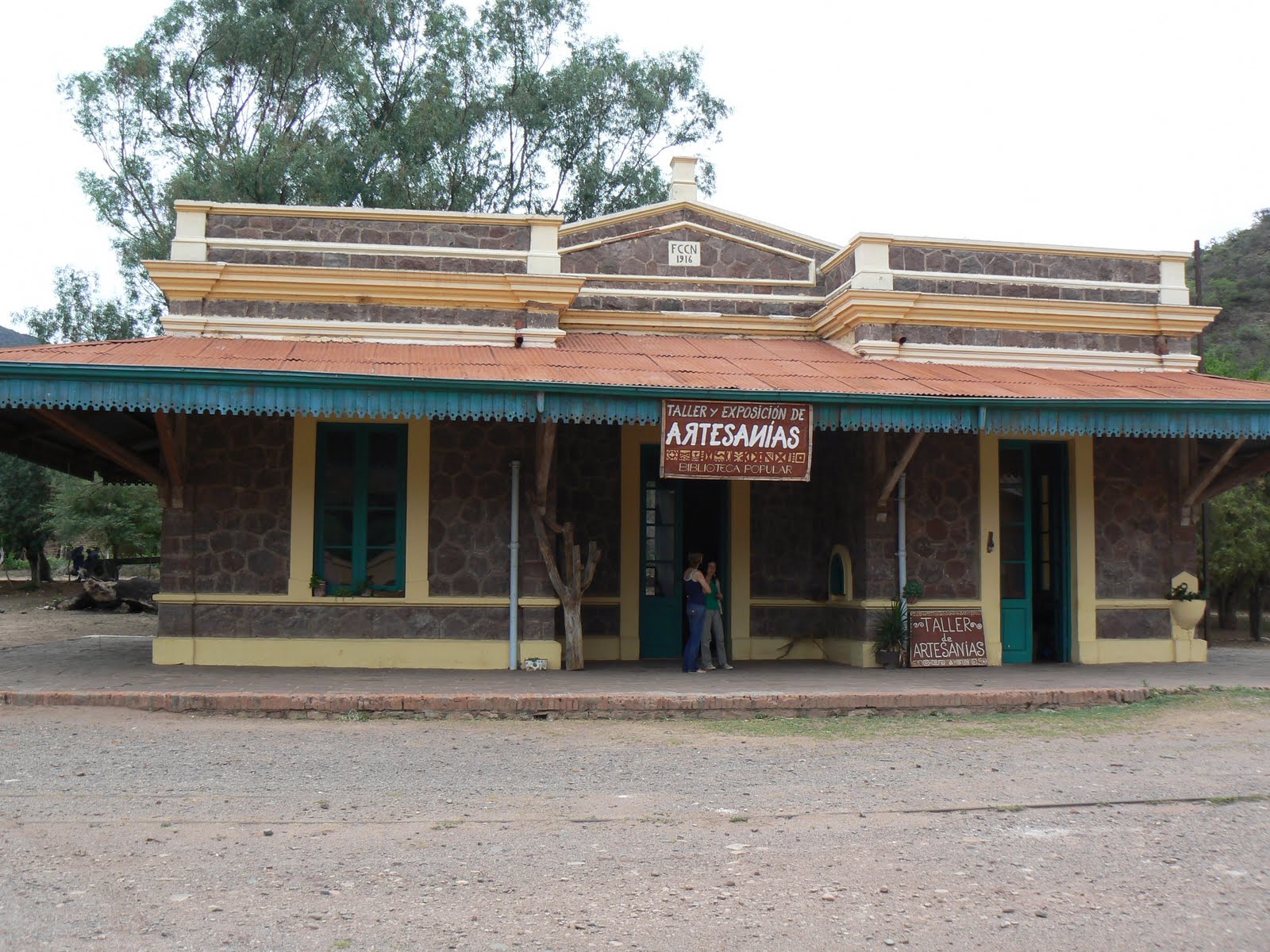
 The train station was built in 1916 and was recently rennovated; it has a lot of cool architectural detail. I chatted a bit with a woman who runs a craft co-op inside. Apparently the town is in such good shape because a few years ago a thriller set in the U.S. southwest was filmed here. The place does give off a ghost-town vibe; we saw only one person on the street while we were there.


